Getting there and the evening
Finding the Santa Monaca church
How to find the Santa Monaca church in Florence's Oltrarno, which larger church not to confuse it with, and how the hour-long concert evening runs.
Reserve a seat at the recital ↗Quick answer
The Santa Monaca church is at Via Santa Monaca 6 in Florence's Oltrarno, on a small street between Piazza del Carmine and Piazza Santo Spirito. It is not the large Carmine church on Piazza del Carmine. Your confirmation gives the start time and meeting instructions. The concert lasts about an hour, with an interval at which wine is sold at your own expense, in a converted convent with rows of chairs in front of a grand piano.
The address
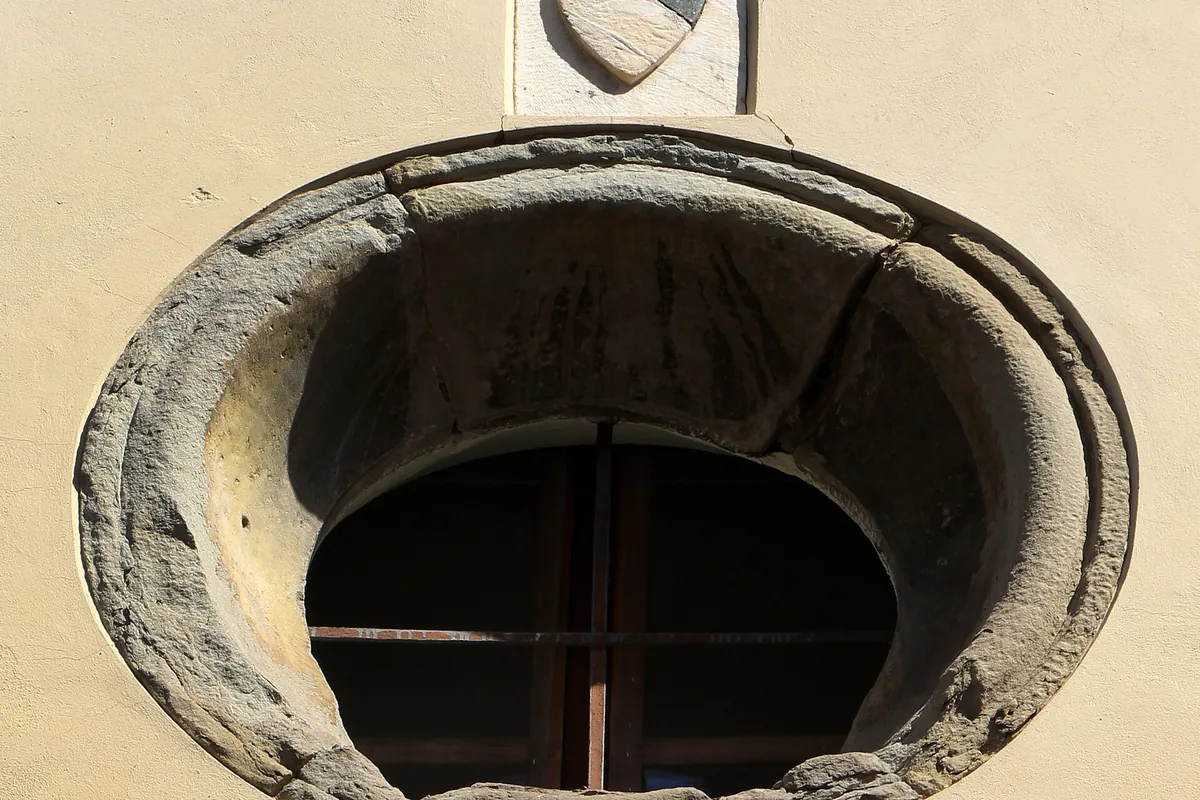
The church of Santa Monaca, now deconsecrated, stands at Via Santa Monaca 6, 50124 Florence, as the city's tourist board gives it. It lies in the Oltrarno, the part of Florence south of the Arno, in the stretch between Piazza del Carmine and Piazza Santo Spirito, as the booking page describes it. A round stone window in the plastered wall is one detail photographs show on the street. Use the street name and number when you search, rather than the look of the front, and check the pin against the street sign before you walk. The street is small, so allow a little time to find the number if the light is poor.
Not the big church on Piazza del Carmine
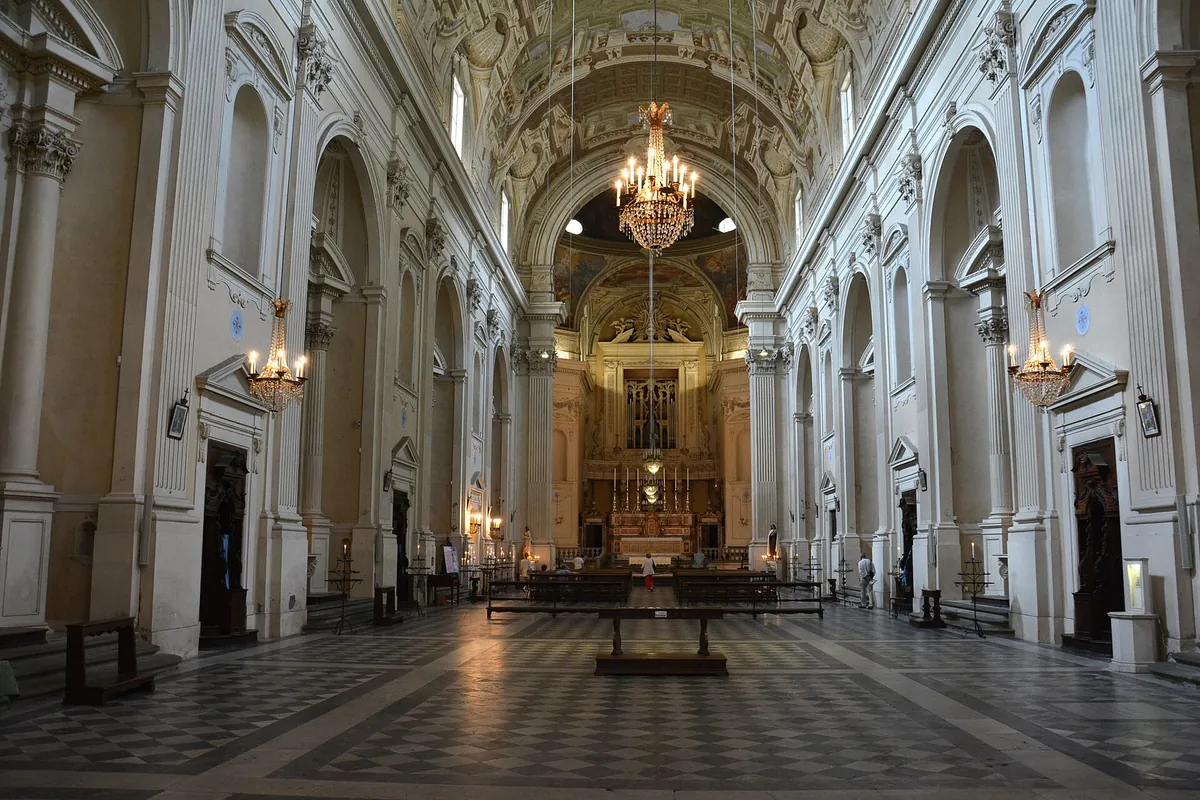
A much larger church, Santa Maria del Carmine, stands on Piazza del Carmine, and it is not the concert venue. The Carmine church was founded by Carmelite friars from Pisa, with construction beginning in 1268, and a fire in 1771 destroyed its interior. It is known for the Brancacci Chapel frescoes, begun by Masolino and Masaccio and finished by Filippino Lippi. Visitors who head for the biggest church on the square will reach the wrong building. Santa Monaca is on a small street between Piazza del Carmine and Piazza Santo Spirito, so search for the street address instead of the saint's name.
Getting there from the centre
From the historic centre north of the Arno you cross the river into the Oltrarno. The district holds Palazzo Pitti, the basilica of Santo Spirito and the Carmine, so landmarks make a better guide than a fixed route: head for Piazza Santo Spirito or Piazza del Carmine, then look for Via Santa Monaca between them. Walking times depend entirely on where you start, so use a map app for your own route and leave a margin before the start. The Oltrarno is part of the historic centre that UNESCO listed in 1982, and its streets are narrow, so allow a little extra time after dark. Save Via Santa Monaca 6 on your phone before you leave and search for that, not the church's name.
Arriving and the start
The booking calendar lists the available times by date, and your confirmation names the start time and where to meet. Have your confirmation ready when you reach the church. Aim to arrive with a few minutes in hand, mostly because the street is easy to overshoot and the larger church on the square can pull you the wrong way. If a date shows several times, choose the one that leaves room for dinner either side of an hour of music. Work backwards from the time on your confirmation, which is the one fixed point of the evening.
Inside the room
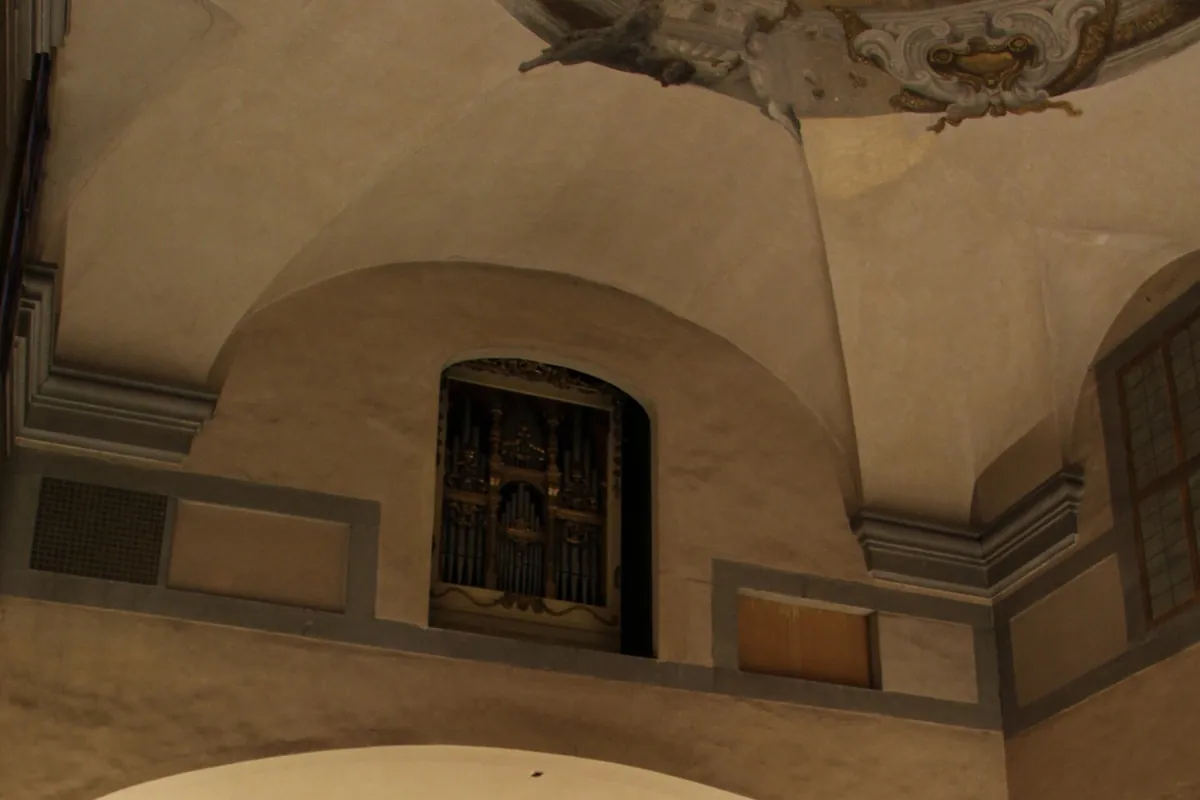
The nave is long and narrow. Wooden choir stalls line both walls, a stone-framed altar holds a painted altarpiece with saints in niches either side, and the vault carries Cosimo Ulivelli's fresco of 1700. For concerts, rows of chairs face a grand piano set on a red carpet in front of the altar. A window high on the wall holds an organ with a gilded case, and the tourist board notes a wooden choir and organ from the 17th century. The room is small enough that no stage separates you from the performers.
The interval and the wine
The ticket description mentions an interval at which wine is on sale, at your own expense. The ticket covers no food or drink, so eat before the concert or after it. An hour of seated listening is short enough that the interval works as a pause for a glass, not a meal. If you prefer to keep the evening simple, book a table nearby for after the music and use the interval only to stretch. The Oltrarno has plenty of places to eat around its squares, and the start time in your confirmation will tell you how to plan the hours around it. Keep a little cash or a card ready, since the interval is a short break.
How the hour runs
The ticket lists one hour, and a printed programme comes with it. Guests describe the hour as well paced, with a good variety of music and singers who are close to the audience. Opera arias are short, self-contained numbers, mostly sung in Italian, so the evening moves quickly from one piece to the next. The performers vary from date to date: some reviews mention two singers with a pianist, others a trio. The programme you hold on the day lists the pieces, and it is the only dependable account of what you will hear. If you are new to opera, that structure is a help: each aria is over in a few minutes, so a piece that does not suit you gives way quickly to the next.
Language and the programme
English is the language shown for the booking. The arias themselves are in Italian, the language of the operas named on the booking page, and the printed programme is your guide to titles and composers. If you like to know the story behind each number before you hear it, the listening guide on this site covers six well-known arias, and the guide to the origins of opera in Florence explains why this city has a claim on the form. Neither guide predicts the programme for your date, because the organiser changes it. Check the booking page for the language of any spoken introductions on your date.
Read next: A listening guide to the arias
Children, comfort and access
The GetYourGuide ticket is not suitable for children under 5. Guests on the booking page sometimes mention the room's temperature or ventilation, so wear layers that are easy to take off, particularly in a crowded summer evening or a cold winter one. The church is a converted convent, with thick old walls. If you need step-free access, ask through the booking page before you book, and do not rely on a general assumption. Seats are chairs in rows, so there is no climbing of tiers, but the entrance and any steps are for the organiser to confirm.
Before you go: a checklist
A short list covers everything the evening needs. The room is a converted convent with old walls and stone, so dress for sitting still for an hour and carry a layer. Nothing else is required beyond the confirmation and a sense of where the street is. If anything on the day differs from this guide, trust your confirmation and the booking page, which are the final word on times, dates and terms, ahead of anything written here.
- Save the address, Via Santa Monaca 6, and check the map pin
- Have your confirmation ready, with the start time
- Bring a layer that is easy to take off
- Eat before or after: food is not part of the ticket
- Leave a margin for the narrow streets after dark
Who this isn't for
This evening is not for anyone who wants the full scale of an opera house, a late dinner included in the ticket, or a venue with tiers of seating. Children under 5 are a poor fit. If walking narrow old streets after dark is a problem, check your route first. The church is small and the programme modest by design, so it rewards visitors who want a short, close and easy hour of music in a historic room more than those hunting for spectacle.
- You want an orchestra and a staged production
- You want dinner included in the ticket
- You are travelling with a child under 5
- You need confirmed step-free access and have not asked
Frequently asked questions
Where is the Santa Monaca church?
At Via Santa Monaca 6, Florence, in the Oltrarno, on a small street between Piazza del Carmine and Piazza Santo Spirito.
Is it the large Carmine church?
No. Santa Maria del Carmine is a different, much larger church on Piazza del Carmine. Check that your map pin shows Via Santa Monaca.
How long does the concert last?
The ticket lists one hour. Your confirmation gives the start time and where to meet.
Can I buy wine at the concert?
Wine is on sale in the interval and paid for separately. The ticket covers no food or drink.
Does the programme change?
Yes. The performers and arias vary with the date, and the printed programme lists the pieces on the day.
Sources